
On this page
ToggleAir Compressor Repair in Sri Lanka
Need air compressor repair in Sri Lanka for pressure loss, overheating, leaks or shutdown alarms? Contact Vortex Axion on 0777 123 263 or 0117 101818. Share your model, alarm code and site location to arrange a free inspection and discuss the assessment and repair scope.
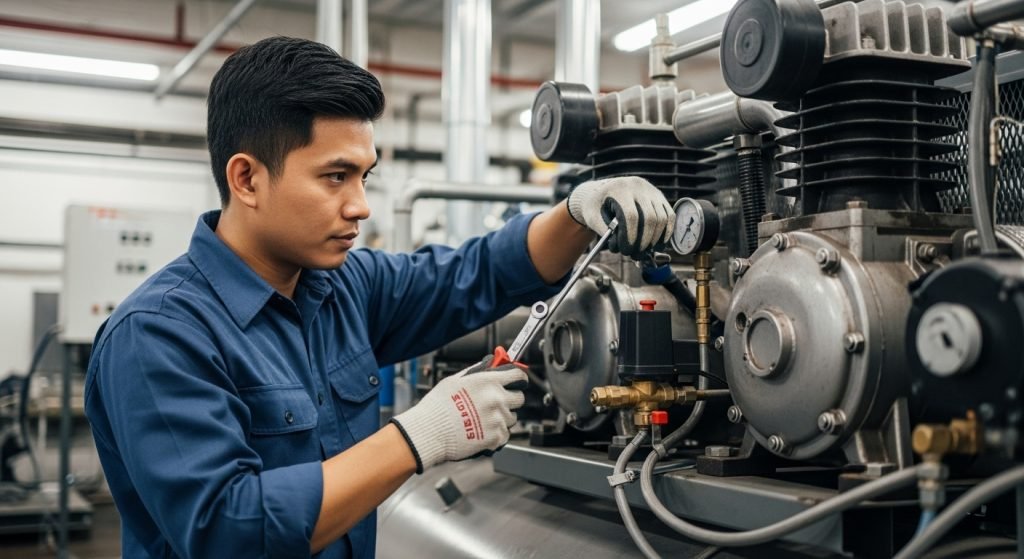
Start with the symptoms and machine details
Arrange compressor fault assessment in Sri Lanka
A shutdown may involve the compressor, its controls, the electrical supply or the connected air system. Before requesting a repair, record the model and serial number, operating hours, displayed alarm and circumstances of the fault. Vortex Axion can discuss the information needed for assessment, the proposed work and parts availability for your machine.
Information that helps us assess your repair
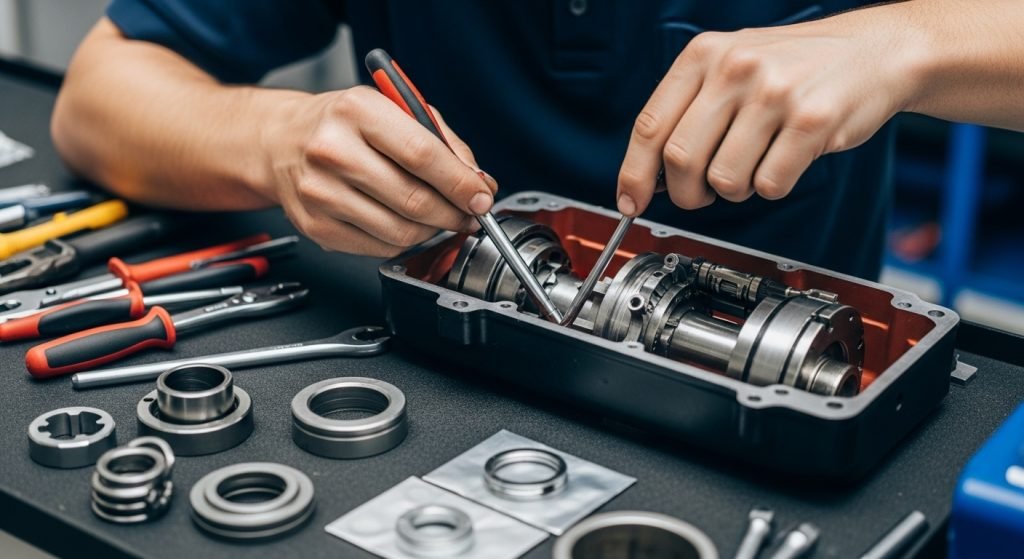
Rapid Response & Minimal Downtime
Provide your district, site access details and production constraints. Confirm the available assessment arrangements with our Sri Lanka team.
Expert Diagnostics & Troubleshooting
Include the alarm code, running hours and recent service history. A clear fault record helps define the checks needed for the particular model.
Genuine MAC3 Spare Parts
Use the machine's model and serial number to verify replacement references. Confirm the proposed parts and applicable warranty terms before work starts.
Comprehensive Repair Capabilities
Describe whether the issue concerns pressure, temperature, controls, leaks or starting. Assessment should establish the cause before components are replaced.
Transparent Communication
Request confirmation of the proposed work, components and costs. Any additional work should be discussed before it is undertaken.
Preventative Recommendations
Keep the assessment findings with your service records. Discuss any inspection or maintenance changes recommended after the repair.
Our compressor repair process
1. Initial Contact
Call Vortex Axion on 0777 123 263 or 0117 101 818 or use our contact page with your Sri Lanka site details.
2. Rapid Assessment
Send the model, serial number, alarm code and a short account of when the problem occurs.
3. On-Site Diagnosis
Confirm the assessment location and timing with the team; provide site access and safety requirements.
4. Transparent Quotation
Review the quotation for the proposed labour, components and any exclusions.
5. Expert Repair
Confirm the agreed scope before repair work proceeds.
6. Testing & Commissioning
Discuss the checks required to verify pressure, operation and control functions after repair.
7. Follow-Up & Advice
Record the work completed and any follow-up service or operating checks recommended.

When to call for compressor repair
Request an assessment if pressure falls unexpectedly, the machine repeatedly trips, temperatures rise or you notice unusual noise, vibration or leakage. Follow the manufacturer’s shutdown instructions and your site’s safety procedure; do not keep restarting a machine with an unresolved fault.
Send a nameplate photo, the displayed error code and a description of what happened before the problem began. Call 0777 123 263 or 0117 101 818 to discuss support for your location in Sri Lanka.
Confirm the repair scope before work begins
Ask for the proposed assessment, required components, quotation and expected timing. After repairs, confirm which operating checks were completed and any follow-up servicing recommended for your machine.
Selection guide and common questions
On this page: Compressor repair: identify the fault before replacing parts · Information to prepare for air compressor repair in Sri Lanka · Pressure loss, overheating, leaks and unusual noise · Agree on the compressor repair quotation · Testing, records and preventive maintenance · Free site inspection and repair enquiries
Compressor repair: identify the fault before replacing parts
Compressor repair starts with a clear account of the failure. Record whether the machine will not start, runs without building pressure, overheats, trips electrically or stops with a displayed alarm. Note when the problem began and any recent service, power interruption or production change. Send the model, serial number and controller display photographs when making an enquiry.
A symptom does not identify a replacement component by itself. Pressure loss can arise from the machine, filters, leaks or the connected distribution system. Temperature and shutdown complaints may involve installation conditions as well as mechanical or control faults. An assessment should establish the cause before a repair scope and parts list are agreed.
Information to prepare for air compressor repair in Sri Lanka
Provide the compressor brand, model, power rating, operating hours and the last service details. Explain whether the issue occurs at startup, when loaded, after a long run or only when several tools operate. If a dryer or filter alarm is present, identify that equipment separately so the enquiry does not assume the compressor itself is responsible.
Share the Sri Lankan site location, access arrangements and production constraints. Confirm whether an on-site assessment or another service arrangement is appropriate for the machine. A complete initial record helps the team prepare; it does not replace inspection or guarantee a diagnosis from a photograph.
Pressure loss, overheating, leaks and unusual noise
For low-pressure complaints, describe the pressure observed at the compressor and at the tool, when demand increases and whether the problem is recent. For overheating, provide the displayed temperature or alarm and explain the room ventilation. Report visible leaks and unusual vibration without removing guards or opening equipment while it is running.
Unusual noise should be investigated before discussing a low-noise replacement option. Follow the manufacturer’s shutdown instructions and the site’s isolation procedure. Do not repeatedly reset an unresolved alarm. Qualified personnel should handle electrical and mechanical fault assessment; do not treat general website guidance as instructions to dismantle a pressurised machine.
Agree on the compressor repair quotation
Ask for an itemised proposal describing the fault assessment, labour, components and any transport or site attendance. Replacement references should match the actual model and serial number. Parts availability, expected scheduling and any exclusions must be confirmed before work proceeds. Changes to the scope should be discussed rather than assumed to be included.
Repair cost depends on the fault and the machine condition. Compare the proposed work with the value and expected continued use of the equipment. If replacement is being considered, review our air compressor range and electric compressor size guides. This helps compare options without assuming that a larger new machine is the answer to every fault.
Compressor repair testing, records and preventive maintenance
After compressor repair, ask which operating checks were completed and what was recorded. Pressure build-up, control functions, alarms and leak checks should be considered for the agreed scope and model. Keep the completed-work record, replaced part references and follow-up recommendations with the service history.
Use our compressor maintenance page to plan routine servicing and spare-parts page for model-specific enquiries. Dryer and receiver issues belong in the wider system review. For MAC3 equipment, consult the official manufacturer resources and the manual supplied for the actual machine.
Free site inspection and repair enquiries
Contact Vortex Axion to arrange a free site inspection and discuss the compressor repair requirement. Confirm the visit timing, site access and what the inspection covers. Diagnostic work, parts and repairs should be identified in a separate agreed quotation; a free initial inspection does not imply that all subsequent work is free.
Can an alarm be diagnosed by phone? The alarm and machine details help an initial discussion, but the cause may require inspection.
Can you check replacement parts? Send the nameplate and part reference so compatibility and availability can be reviewed.
How do I request compressor repair? Call 0777 123 263 or 0117 101818, or send an enquiry. Our office is at 31, 1st Lane, Medawelikada Road, Rajagiriya, Sri Lanka.
Starting and shutdown complaints: prepare a clear record
If the machine does not start, explain what the display shows and whether the fault follows a power interruption, a service visit or an ordinary stop. Note whether the controller is powered and whether an alarm is recorded. Send photographs of the display and nameplate with your compressor repair enquiry. Avoid guessing that the motor or controller must be replaced simply because the machine will not run.
For a machine that starts and stops repeatedly, record the operating sequence and the elapsed time before shutdown. State whether it happens unloaded, when pressure rises or after a long period of operation. A repeatable account is more useful than resetting the alarm several times. Follow the manufacturer’s instructions and have qualified personnel assess electrical or mechanical conditions.
If recent production changes increased the number of air users, describe those changes too. A compressor operating outside the original demand pattern may behave differently from one with an isolated component fault. The assessment should consider the installation and connected system as well as the machine. Agree on what information will be recorded before repair recommendations are made.
When the fault may belong to the air system
Compressor repair enquiries often begin with low pressure at a tool. Describe the reading at the tool and at the compressor, and identify the hoses, filters or dryer between them. Explain whether the complaint is limited to one workstation or affects the whole site. This helps determine whether the first investigation should concern production demand, distribution losses or compressor operation.
Report dryer alarms, visible condensate and filter service indications separately from compressor alarms. Supporting equipment can require its own assessment and consumables. Provide the model information for each affected item rather than assuming that repairing the compressor will solve every air-quality or pressure problem. Review the system layout with the service team.
If the complaint is gradual, include previous readings or service reports where available. A recent change in behaviour and a longstanding design limitation need different discussions. Keep the history factual: what was observed, under which operating conditions and when. This allows the proposed diagnosis and work scope to follow the evidence.
Compressor repair, overhaul or replacement: compare the options
Ask the compressor repair proposal to explain the identified fault and the intended outcome. Some work replaces a specific failed component; a wider overhaul involves a different scope and assessment of machine condition. Confirm which tasks are included, which measurements will be recorded and which components remain outside the work.
Compare the repair quotation with the expected future duty of the machine. A unit that no longer meets production demand may need a separate capacity review even after its fault is corrected. If replacement is considered, ask for airflow at working pressure and a complete accessory schedule. Do not compare only the old and new motor ratings or assume that replacement eliminates distribution problems.
Discuss timing, parts availability and production interruptions openly. Confirm whether transport, site attendance and follow-up checks are included in the proposed cost. No website can establish the right choice without the actual machine condition and application. The purpose of the initial inspection is to obtain the information needed for that decision.
Keep a service history that supports future diagnosis
Maintain a record of operating hours, service dates, consumable references and any alarms. Include changes to controls, pressure settings and connected production equipment. Give the technician access to previous repair reports rather than relying only on memory of the last breakdown. A clear history helps identify recurring symptoms and distinguish a new fault from an unresolved one.
After compressor repair, record the work completed and the agreed operating checks. Retain replaced-part identification where provided and note any follow-up inspection recommended. Ask the team to explain any operating conditions that need attention, such as ventilation, access or servicing. Confirm the advice for the actual model and the work performed.
Review the maintenance schedule when running hours or site conditions change. Dusty, hot or heavily used installations may need a model-specific maintenance discussion. Keep the manufacturer’s manual available to operators and maintenance staff. Support after the repair should be based on the equipment documentation and observed conditions, rather than a general promise that faults cannot recur.
Repair questions to ask before authorising work
What exactly is included in the compressor repair? Request a written scope listing assessment, labour, components and the checks to be completed. Confirm additional attendance, transport or consumables where relevant.
Will a free inspection include parts or repairs? An initial site inspection and the subsequent work are different items. Ask what the free visit covers and agree separately on diagnostic work, replacement parts and repair charges.
Can you promise a completion date immediately? Scheduling depends on diagnosis, access and component availability. Ask for a realistic timing proposal after the requirement is assessed.
Should I buy a quieter machine instead? First identify the cause of unusual noise. If a new machine is being considered, compare low-noise options using the specific model’s acoustic information, capacity and installation requirements.
More questions about compressor repair and follow-up
What photographs help with a compressor repair enquiry? Send a clear nameplate picture and the controller display showing the fault. Include an overall view of the installation if ventilation or access is relevant. Identify supporting equipment separately. These images support an initial discussion, but they should not be treated as a complete diagnosis or instructions for the user to open the machine.
Why does the same alarm return after a reset? A reset can clear an indication without correcting its cause. Record the alarm and the circumstances in which it returns. Follow the manufacturer’s operating instructions and stop repeated restarting if the fault is unresolved. A compressor repair assessment should establish the cause before changing parts or control settings.
Should I supply parts before the compressor repair assessment? Ask the team to confirm the proposed part references against the model and serial number. A visually similar component may have a different rating or application. Agree on compatibility, supply responsibilities and the repair scope first. Do not assume that a component advertised for the same power class is correct.
What happens if additional compressor repair work is found? Ask how new findings will be communicated and approved. The initial quotation should identify its scope and exclusions. If inspection reveals a further issue, request an explanation and a revised proposal where appropriate. Clear communication helps avoid treating an unexpected component or extra attendance as part of the original offer.
Which checks should follow compressor repair? The appropriate checks depend on the fault and the work completed. Ask the service record to identify the operating conditions, observations and follow-up advice. Review pressure, alarms and control behaviour relevant to the agreed scope. A brief test does not establish performance under every possible production condition.
How can I prepare the site for an assessment? Confirm access, the machine location and any site induction requirements with the team. Make the service history and equipment documents available. Production interruptions and isolation arrangements should be planned through the people responsible for site operations and safety. Do not dismantle the equipment merely to prepare for a visit.
Does quieter operation prove that compressor repair succeeded? Sound is only one observation. Discuss the original complaint and the checks required to confirm the agreed work. If a new low-noise compressor is being compared, request its acoustic data and a suitable installation plan. Normal sound and the absence of an alarm alone do not demonstrate every aspect of system performance.
What information should be kept after compressor repair? Retain the date, operating hours, work scope, part references and any recorded test results. Note follow-up servicing and changes to controls or production demand. Provide this history with future service enquiries so recurring symptoms can be assessed using a consistent record. Keep model-specific maintenance guidance with the equipment manuals.