
Process-specific air-quality planning
Oil-Free Compressors in Sri Lanka
Oil-free compressors in Sri Lanka: Discuss MAC3 scroll and non-lubricated screw options with Vortex Axion using your actual airflow, pressure and process air-quality requirement. Provide the intended use, operating schedule and installation location so the proposed equipment can be compared against a clear application brief.
The offer should identify the exact compressor model, control arrangement, treatment equipment and supplied documentation. Oil-free compression does not by itself describe every quality parameter at the point of use. Ask the process owner to confirm requirements for moisture, particles and other relevant conditions, and include any required verification in the project scope.
Compare the complete system rather than a motor-power label or a general purity claim. Existing receivers, dryers, filters and distribution work may need separate assessment. If certifications or test reports are required, ask for the actual documents and the equipment and conditions they cover. The responsible team should review them against the application.
Request a written quotation identifying availability, installed scope, commissioning and service responsibilities. Low-noise options can be discussed using model-specific information where offered. The final purchase should use the accepted application brief and actual manufacturer documents; this page does not establish stock, a universal noise level or approval for every specialist use.
On this page
ToggleOur Commitment to You
Discuss oil-free compressors with Vortex Axion in Sri Lanka. Send the process requirement and site information. Call 0777 123 263 or 0117 101818 to request the proposed scope and quotation.
Oil-free compressors for a defined process requirement
An enquiry for oil-free compressors should describe the process and the air-quality requirement at the point of use. Tell Vortex Axion whether air contacts a product, operates equipment or serves another defined purpose. Provide the actual specification or the responsible process owner’s requirement. The equipment choice should follow that brief rather than assume every application described as sensitive needs the same complete system.
Separate confirmed quality requirements from a preliminary preference for a compressor type. If the specification is still being developed, identify that work and the person authorised to approve it. A supplier can discuss equipment options, but the factory should know which required outcome it is evaluating. Keep those documents with the technical enquiry and update them when the process changes.
For oil-free compressors, identify the airflow, operating pressure, production schedule and intended equipment role as well as the quality requirement. A machine description alone does not establish the complete air system delivered to the process. Ask the technical proposal to identify the exact model, treatment equipment and installation boundaries.
Oil-free compressors and complete air-quality assessment
Review oil-related requirements alongside moisture, particles and any other specified process conditions. Ask the responsible team to identify how the complete installation is assessed. Oil-free compression should not be treated as a description of every downstream quality parameter. The treatment equipment, distribution system and required verification should remain part of the application discussion.
When comparing oil-free compressors, request the offered model’s documentation and the scope of any certification or test report supplied. Identify the exact equipment and conditions covered by the document. Do not assume a certificate applying to one model or test condition establishes approval for an entire factory installation or a different quoted version.
Ask how the proposal addresses the quality requirement at the agreed point of use. A factory may have existing receivers, dryers, filters or distribution work that needs separate review. Keep the responsibilities for equipment supply, installation and any process-required testing clear. The final purchasing decision should use the approved application and actual model documents.
Oil-free compressors airflow and pressure selection
Supply the required airflow at the intended operating pressure and describe representative production periods. Include normal duty, reduced demand and simultaneous peaks. If figures are estimated, retain their source and assumptions. The supplier should be able to explain how the exact offered model is selected rather than transferring a catalogue value from a machine with a similar motor rating.
Oil-free compressors may be proposed as new equipment, replacements or additions to an existing group. Identify the role of each machine that will remain and the conditions it is expected to cover. Ask for the system arrangement to be explained at the relevant demand levels. A sum of motor ratings does not provide a complete description of the delivered supply.
Keep operating-point comparisons consistent across offers. If suppliers propose different pressures or configurations, ask them to identify those alternatives separately. The approving team should understand whether the quotations address the same process requirement. Do not treat nominal capacity or a similar cabinet appearance as confirmation that two models are equivalent.
Oil-free compressors scroll and screw options
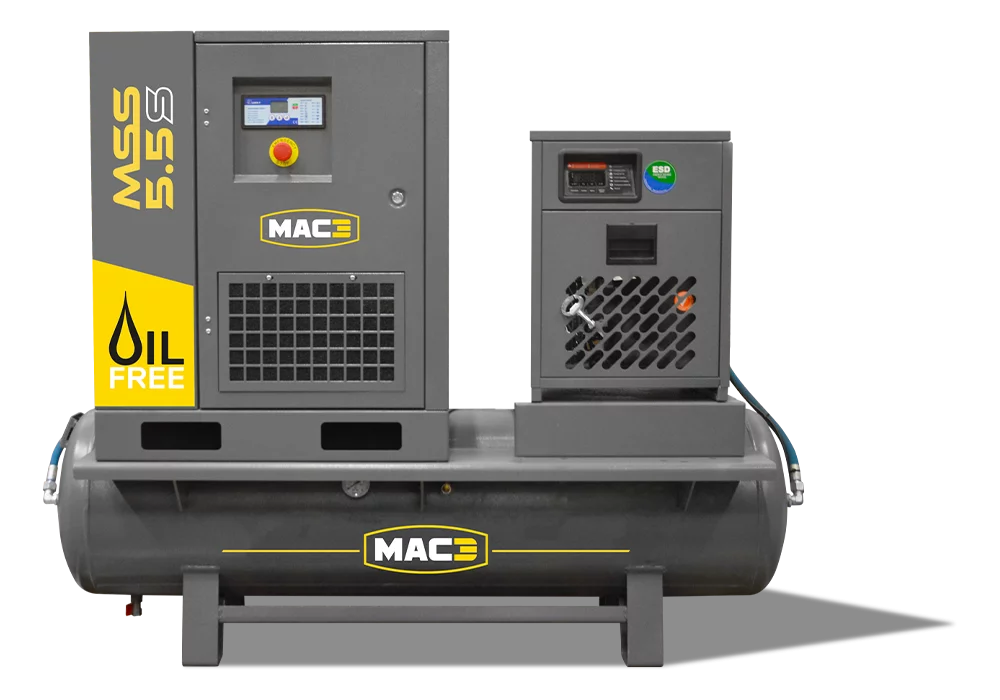
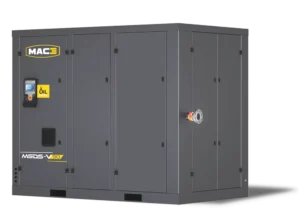
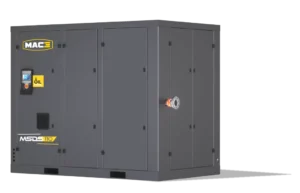
Describe the application’s duty before comparing scroll and non-lubricated screw proposals. Request the exact models available for that duty and the supporting manufacturer information. MAC3 presents both scroll and oil-free screw ranges, but availability and the supplied configuration should be confirmed for the actual enquiry rather than assumed from a range page.
For oil-free compressors, compare documented performance at the required conditions, installation needs and the offered maintenance scope. Ask why the supplier recommends a particular configuration for the site’s schedule and quality requirement. A broad technology label should not replace the model-specific selection explanation.
If alternative machines have different treatment, control or utility requirements, keep those differences in the comparison. A lower machine price may describe a different complete project. Ask for the technical and commercial proposals to use the same application brief and for any limitation or exclusion to be identified before order approval.
Oil-free compressors controls and low-demand operation
Ask the supplier to describe how the proposed machine operates through the site’s production timetable. Identify the expected role during normal operation, quiet periods and peaks. Where fixed-speed or variable-speed alternatives are actually available, request separate model-specific explanations. Do not assume a control type guarantees a particular saving or covers every change in demand.
For oil-free compressors joining an existing system, ask which control and integration equipment is included. Confirm actual interfaces and the work needed to coordinate machines. A communication feature in a brochure does not establish that programming, connection or commissioning of the factory’s control arrangement is part of the quoted scope.
Agree who can change operating settings and how approved changes are recorded. Keep the supplied instructions and approved group roles available to the operations team. If production changes later, ask for the control and equipment selection to be reviewed using the actual duty. The original arrangement should not be treated as approval for every later operating pattern.
Oil-free compressors dryer, filtration and receiver scope
Request an equipment schedule identifying the dryer, filtration, receiver, drains and other treatment components proposed. Ask for their selection conditions and the process requirement they address. Identify any existing component proposed for reuse. The technical offer should explain the complete supplied arrangement rather than only name the main compressor.
Oil-free compressors should be compared with the application-specific treatment scope alongside them. A dryer or receiver illustrated elsewhere is not a sizing recommendation or an automatic inclusion. Ask for the actual project schematic and confirm installation boundaries. The factory should be able to trace the supplied accessories to the agreed quality and operating brief.
Discuss maintenance and the effect of taking a shared treatment component out of service. Any bypass or temporary route must be assessed against the process requirement. Continued pressure does not establish the required air quality. Include relevant drains, condensate arrangements and commissioning responsibilities in the equipment and work schedules.
Oil-free compressors location, utilities and noise information
Provide a room plan showing the proposed machine location, nearby equipment and access routes. Request actual dimensions and the clearances needed for maintenance. A cabinet that fits the available area may still require a different arrangement for service or utilities. Use the offered manufacturer’s installation information rather than the appearance of a product photograph.
For oil-free compressors, have the relevant qualified professionals assess the actual electrical and cooling requirements. Do not select cables, protection or room equipment from a motor-power label alone. Identify what the supplier provides and what the factory must prepare. The site-readiness programme should include named owners for the required work.
If low noise is a selection concern, request documented measurement information for the quoted model and its conditions. Explain the proposed location and any stated site requirement. Do not assume every oil-free configuration has the same noise performance. Any proposed site measures should be reviewed using the actual equipment requirements and identified in the work scope.
Oil-free compressors maintenance and continuity planning
Request the exact model’s service schedule and ask which tasks and consumables are included in a proposed support agreement. Confirm the offered warranty conditions and maintenance obligations. The guide does not establish a universal interval, stock position or attendance commitment. Have the actual terms recorded in the written offer.
For oil-free compressors serving critical processes, identify what production needs during a planned service or unexpected interruption. Ask the supplier to assess the proposed standby or temporary arrangement against that requirement. The number of machines or presence of a receiver alone does not establish sufficient continuity for every situation.
Keep machine details, serial numbers, service records and the approved process brief together after handover. Describe relevant conditions when requesting support. The qualified team should use the actual model instructions and installation record for its assessment. Changes to air users, treatment or production should be documented for future review.
Oil-free compressors price in Sri Lanka and project comparison
Request a quotation in Sri Lankan rupees for the exact model and agreed equipment schedule. Compare the oil-free compressors price alongside treatment, controls, delivery, installation and commissioning where relevant. Confirm applicable taxes, payment terms and exclusions. A machine-only offer and a complete installed-system offer are different project boundaries.
Assess operating-cost estimates using the supplier’s documented performance and stated production assumptions. Identify the machines and auxiliary equipment included in the calculation. Keep measured factory data separate from estimates. A general percentage saving or nominal motor rating is not a complete forecast for the proposed installation.
Confirm availability, lead-time terms and any stock arrangement for the actual model with Vortex Axion. This page does not promise a fixed price or delivery date. The accepted quotation should identify technical assumptions and commercial responsibilities so purchasing, production and maintenance know what is being supplied.
Oil-free compressors acceptance and application records
Agree on the required commissioning and handover documents before ordering. Identify the operating conditions, supplied scope and people authorised to approve completion. Any process-required air-quality verification should be specified with its responsible party. Ordinary equipment startup should not be treated as confirmation of every requirement in a specialist process specification.
For oil-free compressors, retain the approved model schedule, operating settings, supplied instructions and relevant certificates or test documents. Record unresolved items and their owners. If an alternative machine is proposed before delivery, review it against the same application brief and keep the approval with the order.
Explore the refrigeration dryer guide, maintenance services and compressed-air energy audit for related system questions. MAC3 provides manufacturer background; use the exact offered model documents for the purchasing decision.
Example enquiry for oil-free compressors
Suggested enquiry brief: Please review oil-free compressors for our Sri Lanka installation. We will provide the process equipment list, required airflow and pressure, production timetable and room layout. Please identify the exact proposed model and configuration, relevant manufacturer documents, treatment equipment and installation requirements. State the operating conditions used for selection, available alternatives and any information needed before the offer can be finalised.
Ask the proposal to describe the air-quality requirement it addresses at the agreed point of use. Include the actual supporting certificates or test documents where required by our specification, and identify their scope. Please distinguish equipment commissioning from any process-required verification and state who supplies, performs and approves each work package.
For the commercial offer, identify the equipment and accessory schedule, currency, taxes, delivery, site work and payment terms. Confirm the proposed maintenance requirements, warranty conditions and support scope. Explain which tasks remain with our factory or other contractors. If an alternative model is suggested, identify it separately rather than substituting its figures into the main offer.
Keep this example tied to the factory’s actual documents. A sample enquiry is a preparation aid, not a completed technical specification. The final order should reference the approved requirement and the exact accepted equipment schedule.
Oil-free compressors questions before ordering
Does oil-free compression establish complete air purity? Define the full process requirement and ask how the proposed installation addresses it at the point of use. Review particles, moisture and other specified parameters as well as oil-related requirements. Keep treatment and any required testing in the scope instead of relying only on the compressor category.
Are scroll and screw models interchangeable? Compare exact proposals against the required flow, pressure, quality and operating schedule. The technology name alone does not establish equal performance or project scope. Ask the supplier to explain the selection and any additional treatment, control or utility requirement for the offered machine.
Can I assume the equipment is certified for my application? Request the actual documentation and identify what it covers. Have the responsible process team review it against the application specification. Do not transfer a certificate or performance claim from a different model or assume it establishes approval for the whole installation.
Do oil-free compressors still need a dryer and filters? Ask for an application-specific treatment proposal. The required equipment depends on the process conditions and quality specification. Confirm the exact supplied accessories and their selection conditions rather than assuming every package has the same treatment arrangement.
Are low-noise options available? Ask about the actual models offered and request their documented noise information. Explain the proposed location and any stated site requirement. Confirm suitability from the technical proposal rather than assuming a universal noise level for the complete category.
What does a free site inspection cover? Discuss the visit and follow-up scope with Vortex Axion. Prepare the equipment details, application requirement and room plan. The inspection supports selection and planning; final equipment approval should use the offered model documents and the agreed project responsibilities.
Where should an air-quality requirement be checked? Ask the process owner to identify the required point of use and any specified verification method. Keep the test scope, operating conditions and responsible party in the proposal. A document describing compressor performance should not be assumed to establish the quality of air at every downstream use in an existing factory.
Retain the agreed verification requirements with the equipment schedule so commissioning and process approval are reviewed against the same brief.
Request a free site inspection in Sri Lanka
Contact Vortex Axion to arrange a free site inspection and discuss the proposed equipment or service scope. Explain your site location, operating schedule and the decision you need to make. The follow-up should identify information still required before a quotation is finalised.
Vortex Axion (Pvt) Ltd
31, 1st Lane, Medawelikada Road, Rajagiriya, Sri Lanka.
Call 0777 123 263 or 0117 101818. Send your enquiry with equipment details and a description of the application. Confirm availability, project responsibilities and commercial terms in the written offer.