
Setting a New Benchmark in Piston Technology
Reciprocating Compressors in Sri Lanka
Compare MAC3 reciprocating compressor families for your Sri Lankan workshop or production task. Use rated airflow at the required pressure, tool duty and the operating schedule to assess single-stage, two-stage or booster options. Confirm receiver arrangement and electrical requirements for the selected machine.
On this page
ToggleReciprocating compressors price in Sri Lanka
Ask Vortex Axion for reciprocating compressors quoted against your workshop’s actual air requirement. Give the supplier the tools or machines using compressed air, their operating pressure and the expected working hours. Request the exact model and delivered airflow in the offer so you can compare the equipment rather than only a motor-power label.
The price should identify the compressor, receiver arrangement, control equipment and included accessories. Ask for transport, electrical work, pipe connections and commissioning to be separated where they are outside the base package. A clear scope helps you distinguish a complete workshop installation from an equipment-only offer.
Confirm taxes, availability, lead time, warranty conditions and payment terms in writing. This category page introduces families for enquiry; it does not claim that every MAC3 catalogue option is in local stock. Send the existing machine’s nameplate if you are replacing equipment, together with the reason the replacement is needed.
Piston and reciprocating compressors: preparing the requirement
Customers often use piston compressor and reciprocating compressor to describe the equipment in this category. Start the enquiry by describing the work rather than deciding from the terminology alone. Note which tools operate at the same time, how long they run and whether demand is intermittent or sustained during production.
Request the selected machine’s delivered-air rating at the required pressure. Some catalogues identify intake or displacement figures, so ask the supplier to explain what the quoted airflow represents. Do not compare two different types of rating as though they describe the same useful output.
Record the pressure needed at the equipment inlet, not just the setting on the old compressor. Include hose lengths, connections and available observations of pressure during busy operation. Ask what further information is needed to assess the proposed machine and any associated storage or distribution work.
Single-stage reciprocating compressors
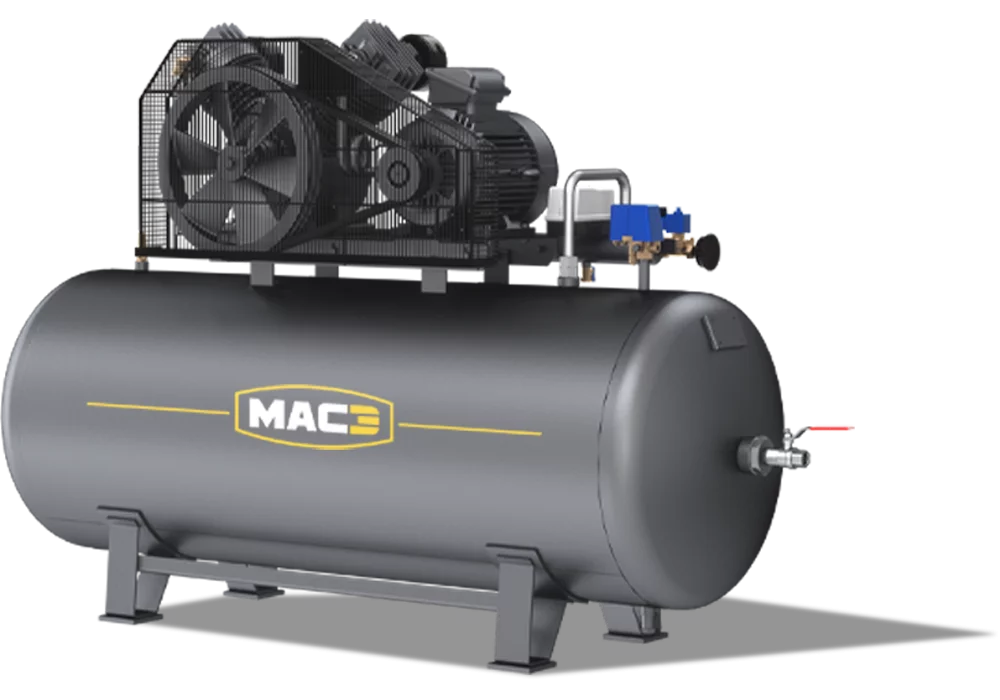
The single-stage family card above links to the existing MAC3 product page. Use it as a starting point for an enquiry and ask for the current specification of the offered model. MAC3’s single-stage manufacturer page identifies the MSPC S family; local availability and supplied configuration are confirmed by Vortex Axion.
Explain your tool duty, working pressure and normal shift pattern before accepting a model recommendation. Ask the supplier to compare those requirements with the offered machine’s documented operating limits. A family name is not a substitute for selecting the actual compressor and its permitted duty.
Check the receiver size, motor supply and control arrangement included with the offered machine. Request a dimensional drawing if floor space or access is restricted. Confirm which accessories and connection work are included so the purchasing team understands the complete equipment package.
Two-stage reciprocating compressors
If the enquiry leads to a two-stage option, ask why the proposed machine is appropriate for your required pressure and workload. Request the exact model’s data instead of assuming that every two-stage compressor has the same output, installation needs or operating schedule.
Give the supplier the pressure requirement for each connected machine and identify the busiest simultaneous demand. Where the existing system has difficulty maintaining pressure, provide the symptom and available readings. Ask for an assessment of the compressor, storage and connections before assuming that changing the stage configuration solves the issue.
Use the two-stage piston page for a family enquiry. Confirm the offered specification, receiver arrangement and installation scope in the quotation, particularly if it differs from the current workshop machine.
Booster enquiries are a separate operating duty
A booster enquiry should state the available inlet air and the pressure required downstream. MAC3’s booster manufacturer guidance describes equipment supplied from an existing compressed-air network. Ask the supplier to review both the incoming supply and the intended high-pressure duty for the actual model.
Do not select a booster from a discharge-pressure label alone. Provide the upstream compressor details, available flow and pressure, downstream demand and any treatment requirement. Request the operating limits and supporting documents applicable to the offered package.
The booster category page is an enquiry reference rather than approval for a particular pressure system. Have the responsible technical team confirm the complete installation, protection and commissioning requirements before ordering.
Reciprocating compressors duty cycle and operating hours
For reciprocating compressors, tell the supplier how work is distributed through the day. Describe short tool cycles, periods of simultaneous use and any production operation that needs a continuing supply. Ask the proposed machine to be assessed using that schedule rather than a single average demand figure.
Request the manufacturer’s operating-duty information for the offered model. Explain any restricted rest periods or production peaks and ask whether those conditions are within the machine’s documented limits. The relevant duty information should accompany the selection, not be replaced by a general description such as industrial quality.
If your workload changes between shifts, provide separate descriptions of quiet and busy operation. Distinguish current demand from possible future additions. Ask the proposal to make its assumptions clear so a later expansion can be reviewed against the basis used for the original purchase.
Reciprocating compressors versus screw-compressor options
Where demand is substantial or the operating schedule differs from the proposed piston machine’s duty, ask the supplier to compare suitable alternatives. The decision should use your measured or calculated requirement, permitted operating duty, installation constraints and total scope rather than a blanket claim that one technology always wins.
Prepare the same requirement sheet for each option, including delivered airflow, pressure, working hours and air treatment. Compare quoted equipment and support on that common basis. Ask the supplier to distinguish an assessed alternative from a generic capacity recommendation.
Browse our electric screw compressor size guides if a screw option is being considered. Confirm the exact machine’s data before comparing it with reciprocating compressors; matching kilowatt labels does not establish matching performance.
Receiver arrangement for reciprocating compressors
Ask what receiver arrangement is supplied with the proposed machine and what documents apply to it. Provide the available footprint, height restrictions and location. If you already have storage, send its nameplate and available records so the supplier can identify what needs assessment.
Discuss the receiver with the complete duty rather than treating litres as a direct measure of compressor output. Ask the proposal to explain the role of storage and the operating assumptions used for selection. Additional storage should not be presented as a solution to every supply problem.
Review our air receiver tank guide when preparing the quotation. Confirm accessories, drains, connection work and the responsible parties for installation and any relevant examination before accepting the package.
Air treatment for workshop and production use
State the air-quality requirement from the connected equipment or process documentation. Ask which drying, filtration and condensate-handling components are needed with the proposed reciprocating compressors. A supplied receiver or a familiar brand name is not proof that the delivered air meets every application requirement.
Include the existing dryer, filters and drain arrangement in a replacement enquiry. Ask whether each component is to be retained, changed or assessed. Where a process requires a documented acceptance result, agree the specification and testing responsibilities with the responsible quality team.
Use the air treatment category guide for related equipment enquiries. Request one coordinated scope when buying the compressor and treatment together so electrical, piping and commissioning work are not left between separate offers.
Electrical supply and installation for reciprocating compressors
Send the available electrical supply details and any site restrictions with the enquiry. Ask the supplier to identify the offered motor, supply requirement and relevant installation information. Have electrical work assessed for the actual equipment rather than assuming compatibility from the compressor’s appearance or approximate horsepower.
Confirm who provides connection work and who coordinates it with delivery. Request dimensions and instructions early enough for the plant team to review the location. Include cooling, access and service clearances from the relevant model documentation in the planning review.
Tell the supplier if the machine must pass through a narrow entrance or be placed in a restricted room. Agree transport, unloading and positioning responsibilities before dispatch. Those tasks may be separate from equipment supply and should be visible in the quotation.
Low-noise enquiries for reciprocating compressors
If noise affects the buying decision, explain the workshop location and any operating-hour or client requirement. Ask for the proposed model’s declared noise information, the measurement conditions and available configuration options. A low-noise description should refer to the offered machine rather than all reciprocating compressors.
Compare information using consistent conditions and discuss the proposed location with your responsible site team. Ask whether the selected configuration changes dimensions, access or maintenance requirements. This page does not promise silent operation or an unverified decibel level.
Keep any noise-related requirement on the quotation schedule so it can be reviewed alongside airflow, pressure and duty. Ask the supplier to clarify which option is included and how its availability is confirmed before purchase.
Reciprocating compressors maintenance and spare-parts records
Request the operating and maintenance instructions for the exact reciprocating compressors being supplied. Identify the model and serial information needed for support. Ask which consumables and routine service items apply and who will handle them after delivery.
Discuss your working hours and available shutdown periods when arranging support. Confirm the included scope, local service contact and the process for reporting an issue. Particular parts availability and service attendance should be agreed for the actual request rather than assumed from a general catalogue.
Keep nameplate photographs and supplied documents with your plant records. Record service work and observations so later enquiries describe the correct equipment and symptoms. Use our spare-parts enquiry page when requesting identified components.
Replacing existing reciprocating compressors
Explain whether the current machine is being replaced because of condition, demand growth or another issue. Provide the nameplate, service history and any observations of pressure during use. The replacement enquiry should distinguish a changed operating requirement from a repair or maintenance problem.
Ask the supplier to state how the proposed reciprocating compressors match your present tools and schedule. Compare keeping or servicing the existing equipment with replacement only where an assessment supports that option. Avoid choosing a replacement solely from the old machine’s power label.
Confirm whether the replacement changes electrical work, receiver arrangement, treatment or pipe connections. Ask the offer to list removal and installation responsibilities separately. Keep the final equipment schedule with the quotation so your contractor can prepare for the actual model.
Reciprocating compressors workshop enquiry example
A workshop planning to use several tools should list their stated requirements and identify the combinations used during the busiest work. For reciprocating compressors, explain the length of each tool cycle and the pauses between operations. Include the available supply and where the machine is to be placed.
Ask the proposal to identify the selected operating point and permitted duty for that pattern. If information is missing, establish what must be measured or confirmed before a model is selected. A complete enquiry is more useful than asking for the largest machine that fits the room.
Agree how the supplied arrangement will be checked using representative workshop operation. Confirm the tools, connections and accessories involved in that check. Record the outcome at handover and identify any outstanding items rather than relying only on an unloaded demonstration.
Free site inspection and quotation comparison
Ask Vortex Axion about a free site inspection for reciprocating compressors in Sri Lanka. Provide your location, contact person, operating hours and the requirement you want reviewed. Agree the appointment and scope before expecting a visit.
Prepare the tool information, nameplate photographs and available documents. Tell the team about access restrictions and whether operations can stop for observations. A preliminary inspection is different from a detailed engineering study, certified examination or specialist testing; ask what is included and what needs a separate quotation.
Compare proposals against the same requirement sheet. Check the identified machine, delivered-air rating, duty information, receiver, accessories and installation boundaries. Ask for clarification of omissions before comparing totals, and retain revisions agreed after the site visit with the final purchase scope.
Handover checks for reciprocating compressors
Agree the commissioning and handover scope before accepting the quotation. The record should identify the supplied machine, receiver and accessories, the applicable operating instructions and the people responsible for routine checks. Ask the supplier to distinguish included commissioning from tasks assigned to your electrical or piping contractor.
Provide the representative tool combination to be used when checking the installation. Ask which observations will be recorded and who will confirm any process-specific requirement. If production cannot be interrupted for the planned check, agree an alternative arrangement with the responsible parties in advance rather than leaving acceptance unclear.
Keep the supplied identification documents and drawings together. Note the service contact and how to report an issue, including which nameplate details and symptoms to provide. A consistent handover record makes a later support enquiry easier than searching for model information after a problem occurs.
Planning a future workshop addition
If you expect to add tools later, identify the proposed equipment and likely operating schedule separately from today’s requirement. Ask the reciprocating compressors quotation to state whether that addition is included in the selection assumptions. Do not treat an unexplained spare-capacity claim as a confirmed expansion plan.
Record what information would trigger a fresh assessment: a different pressure requirement, more simultaneous tools or a longer operating day. Keep that note with the approved proposal. Future purchasing can then review the original duty and supplied machine’s documented limits rather than assuming that unused receiver volume establishes enough compressor capacity.
Reciprocating compressors frequently asked questions
Does motor power identify useful airflow? No. Ask for delivered airflow at your required pressure and the rating basis. An intake or displacement figure should not be compared as though it were an equivalent delivered-air measurement.
Which piston family suits my workshop? Provide the tool demand, pressure and operating pattern. Ask for a model-specific assessment instead of deciding from the stage name alone.
Can I request low-noise options? Yes. Include your site requirement and request the offered model’s documented noise information and configuration details.
Are installation and accessories included? Confirm the itemised scope. The receiver, treatment, transport, electrical work and pipe connections may be separate items.
Can a booster replace a normal workshop compressor? A booster has an identified inlet-supply and downstream duty. Ask the responsible technical team to assess the complete arrangement for the actual application.
Contact Vortex Axion for reciprocating compressors
Request reciprocating compressors guidance from Vortex Axion (Pvt) Ltd in Sri Lanka. Send your tool duty, working pressure, operating hours and site location so the team can discuss the next step and a written equipment quotation.
Call 0777 123 263 or 0117 101818. Our address is 31, 1st Lane, Medawelikada Road, Rajagiriya, Sri Lanka. Use the contact page and ask about a free site inspection.
Confirm the offered model, availability, accessories and installation responsibilities before ordering. Keep the current specification and agreed scope with your equipment records for delivery, commissioning and future service enquiries.
Our Commitment to You
Request Reciprocating Compressors details for your Sri Lanka application from Vortex Axion in Sri Lanka. Include the required flow and pressure, operating hours and site location. Call 0777 123 263 or 0117 101 818 to confirm the configuration, availability and quotation.