
Thermal Mass Dryer in Sri Lanka
MAC3 DRC Thermal Mass Dryer Range
The MAC3 DRC thermal-mass dryer range is an option to discuss for a Sri Lanka air system with changing demand. Provide the operating flow profile, pressure and inlet conditions so capacity and cooling requirements can be reviewed. Confirm the model’s air-quality rating and filter configuration for the proposed installation.
On this page
ToggleThermal Mass Dryer Package Planning
For Thermal Mass Dryer, check the filtration or collection arrangement and its compatibility with the air supply. Confirm drains, element replacement and inspection requirements for the fitted version.
Our Commitment to You
Discuss a thermal mass dryer for your Sri Lanka application with Vortex Axion. Ask about a free site inspection. Call 0777 123 263 or 0117 101818 with your flow, pressure, inlet conditions and site location.
FEATURES
MAC3 publishes a 3°C dew-point reference for the DRC thermal mass dryer family, with R-513a refrigeration, model-dependent controllers and integrated filtration on specified sizes. The family page lists maximum working pressure of 15 bar, ambient temperature of 50°C and inlet temperature of 60°C. Ask for the current offered model data, rating corrections and supplied filter schedule; maximum limits are not a guarantee of capacity at every combined condition.
Confirm electrical supply, dimensions, drains and service access for the selected model. Request filter performance using the relevant units and rating basis rather than interpreting a micrometre filtration grade as residual-oil concentration.
Thermal Mass Dryer Energy Assessment
For Thermal Mass Dryer, assess the listed cooling arrangement against inlet and ambient conditions. Provide ventilation and service clearances from the model documentation, and include drains or separators where specified.

FIELDS OF APPLICATION




Thermal mass dryer price enquiries in Sri Lanka
Request a thermal mass dryer quotation for the air-treatment duty at your Sri Lankan facility. Send the inlet airflow, pressure, temperature and required outlet specification with the enquiry. Ask Vortex Axion to identify the offered MAC3 DRC model and the assumptions behind its selection, rather than quoting a dryer only by compressor motor power.
Compare an itemised package covering the dryer, identified filters, drains, connections and any installation work. Ask whether electrical connection, positioning, pipe alterations and commissioning are included or separate. A price for one cabinet cannot be compared fairly with an offer for a complete treatment arrangement unless those boundaries are clear.
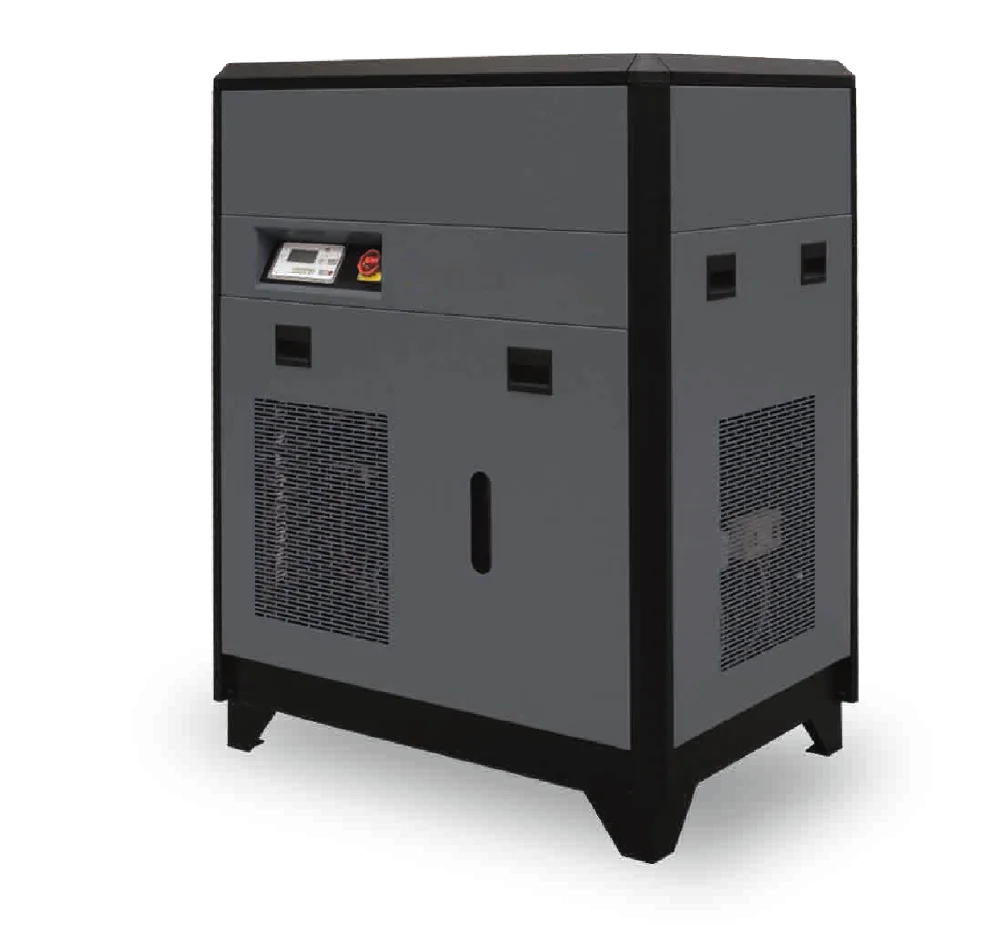
Confirm taxes, delivery, availability, warranty conditions and lead time in the written offer. The photograph on this page is a manufacturer reference, not proof that the pictured model is locally stocked. Request the exact equipment schedule and relevant documents before ordering.
How a thermal mass dryer is described by MAC3
MAC3 describes the DRC thermal mass dryer as using a cooled water-glycol store and circulation to cool compressed air. Its published explanation links refrigeration operation to the condition of that cooling store. See the manufacturer DRC page for the family reference and request current documents for the proposed model.
For a buyer, the useful question is how the offered machine meets the actual drying requirement across the operating schedule. Ask the supplier to explain model selection and expected operation during normal production, reduced demand and shutdown. Do not translate a family-level technology description into a guaranteed saving at your site.
Keep the thermal mass dryer requirement separate from the energy comparison. First establish the required airflow, pressure dew point and operating conditions. Then compare suitable equipment using a stated duty profile, including the costs and assumptions relevant to the offered alternatives.
Thermal mass dryer selection for changing demand
Provide a description of the demand pattern rather than only its maximum. Note the hours of full production, light production and stopped operation. If several shifts use different equipment, describe each shift separately so the proposal can identify what is typical and what is a short peak.
Where records are available, include measured airflow and pressure over a representative period. Ask whether further measurement is needed before an operating-cost estimate can be useful. A quiet-day observation should not be treated as a complete picture of a factory that has busy seasonal or batch production.
Ask the supplier to state which parts of the schedule affect the selection and which affect the cost estimate. This distinction makes it easier to review a thermal mass dryer proposal when production changes later. Keep the approved duty profile with the equipment quotation.
Pressure dew point and process requirements
State the moisture requirement from the process or equipment documentation. MAC3 publishes a 3°C dew-point reference for the DRC family; ask the supplier to confirm the exact offered model’s performance and applicable rating conditions. That reference is not a blanket guarantee of air quality everywhere in an existing pipe network.
Tell the supplier where treated air is used and identify any temperature-sensitive process or exposed pipework. Ask how the proposed drying performance relates to that requirement. If a specialised specification is required, have the responsible technical or quality team approve it before accepting a model.
Where acceptance testing is part of the project, agree the measurement location, operating conditions and responsibility in advance. The thermal mass dryer quotation should distinguish supplied equipment from the evidence required to verify a process-specific result.
Flow, pressure and inlet-temperature corrections
Request the thermal mass dryer rating conditions and the correction basis used for your inlet conditions. Supply the compressor’s delivered airflow at the intended pressure and any available temperature records. A nominal catalogue flow should be accompanied by its basis so two proposed models can be compared consistently.
Ask which temperature values were measured and which were assumed. Tell the supplier about unusually hot rooms, restricted cooling arrangements and variations during the working day. If site values are unknown, establish what information is needed before the final selection is confirmed.
Keep maximum permitted limits distinct from capacity at a particular operating point. The fact that a catalogue lists an upper temperature limit does not establish the useful flow under every condition. Ask the proposed model’s assessment to address the combined flow, pressure and temperature duty.
Electrical supply and controller version
Have the thermal mass dryer electrical requirement confirmed from the exact offered model’s data. The DRC family includes different supply and controller arrangements, so do not assume that a familiar cabinet uses the same supply as another model. Give the supplier your available site supply details.
Request the controller identification, included indications and alarm functions. Ask which operating instructions apply and whether any monitoring option is included or separate. A list of controller names in a family catalogue should not be treated as confirmation that every feature is supplied on your machine.
Agree who provides electrical installation and who coordinates it with commissioning. Ask for the relevant documents before connection work is planned. Record the model and controller information at handover so maintenance enquiries can identify the equipment correctly.
Thermal mass dryer filters and drains
Ask for the filter schedule included with the thermal mass dryer quotation. Confirm model identifiers and whether filters are integrated or supplied separately for the selected size. The DRC family reference contains model-dependent filter arrangements; an equipment schedule is clearer than a general promise of included filtration.
Request the documented role and performance of each filter using the correct units and rating basis. Do not treat a micrometre filtration grade as an equivalent residual-oil concentration. Where the process needs a specified oil or particle result, ask for the appropriate model data and assessment of the complete treatment arrangement.
Confirm drainage, service access and replacement responsibilities. Include the condensate route and any associated work in the scope. Ask what routine information the maintenance team should record and which accessory details are needed for a later parts enquiry.
Room layout and installation scope
Provide a sketch of the intended thermal mass dryer location with dimensions, doors and existing equipment. Ask for the selected model’s dimensional drawing and service-clearance information. Check the access route as well as the final footprint before delivery is arranged.
Include the compressor, receiver, filters and proposed pipe connections in the layout review. Ask the supplier to explain the treatment arrangement for your application. The position of equipment in a product illustration is not a project-specific installation drawing.
Confirm unloading, positioning, supports, piping and commissioning responsibilities. Tell the supplier if work must happen during a planned shutdown. Use the engineering solutions page for a wider package enquiry where several parts of the installation are changing.
Comparing a thermal mass dryer with other technologies
Compare alternatives that can meet the same agreed requirement. The relevant question is not whether thermal mass dryer technology is always better, but which offered arrangement fits your airflow, drying specification, operating schedule and installation constraints.
Ask for a comparison with the refrigeration dryer range where that alternative is suitable. If a lower pressure dew point is specified, ask whether a different technology needs assessment instead of assuming that the DRC family applies to every duty.
Use a common comparison sheet covering rated conditions, filter schedule, drain arrangement, electrical requirements and service scope. Confirm that any price or cost comparison uses the same project boundaries. Otherwise, one proposal may look cheaper because it omits work included in another.
Operating-cost estimates for a thermal mass dryer
Request an estimate that states the operating hours, load pattern, assumed electricity cost and comparison equipment. Ask whether the calculation concerns only dryer electricity or includes other relevant system costs. Avoid relying on a percentage saving without an identified baseline.
Provide information about shift patterns, seasonal demand and expected production changes. Ask which values the estimate is most sensitive to and how those values were obtained. A transparent estimate can be updated when the factory schedule changes; an unexplained headline cannot.
Treat the result as an estimate for the stated assumptions, not a guaranteed outcome. If savings verification is required, agree the measurement scope and reporting method separately. A free preliminary site inspection should not be presented as a completed energy study.
Thermal mass dryer maintenance planning
Ask for the offered model’s operating and maintenance instructions, service schedule and consumable identification. Confirm the relevant controller information and the local service contact. Keep the documentation with the equipment record so a future enquiry can describe the actual unit.
Discuss the available maintenance window before commissioning. Identify whether production can stop and whether service access remains available after the surrounding plant is installed. The maintenance arrangement should match the supplied equipment and site constraints rather than a generic schedule copied from a different model.
Record observations and service work consistently, including any alarm details and the operating conditions when an issue occurs. Do not infer the cause of a problem from one indication alone. Provide the relevant information to the supplier and arrange an assessment of the actual installation.
Upgrading an existing drying arrangement
Explain why you are considering a thermal mass dryer upgrade: changed demand, an equipment issue, a process specification or an operating-cost review. Supply the existing dryer and compressor nameplates, available service history and any measurements related to the enquiry.
Ask the review to identify whether the proposed change concerns dryer capacity, control, filtration, drainage or another part of the system. A new cabinet should not be ordered solely because a symptom appears downstream without assessing the relevant conditions.
Confirm which existing components will be retained and which will change. Request an installation scope showing new connections and planned shutdown requirements. If several contractors are involved, identify who coordinates the final arrangement and records the handover information.
Batch-production enquiry example
A factory with concentrated production periods should describe the busy batch, the lighter interval and any overnight shutdown. For a thermal mass dryer enquiry, include the required treated-air flow during each period and the process requirement that must be met throughout operation.
Ask the supplier to assess capacity at the relevant inlet conditions first, then explain how the demand pattern has been used in the operating-cost comparison. Keep occasional future batches separate from confirmed current production unless the proposal explicitly includes them.
Agree any representative checks and measurement period before making a decision based on projected savings. Record the assumptions with the proposal so purchasing, production and maintenance teams understand what the offered arrangement has been assessed to do.
Free site inspection for a thermal mass dryer enquiry
Ask Vortex Axion about a free site inspection in Sri Lanka. Send your location, operating hours, equipment details and the reason for the enquiry. Confirm appointment availability and the scope with the team before expecting a visit.
Prepare the demand schedule, available readings and a sketch of the installation. Tell the team about controlled access or restrictions on stopping production. If a process-quality specification applies, have it available for the discussion.
Ask which preliminary observations are included and whether detailed measurements, testing or specialist work require a separate offer. For a wider measured-system investigation, review the compressed-air energy audit page.
Thermal mass dryer delivery and acceptance
Confirm the exact model, filter schedule, electrical version and included accessories against the final quotation. Ask for the supplied drawings and instructions before delivery. Agree unloading and positioning responsibilities using the access conditions at your premises.
Where commissioning is included, identify the operating conditions and the people who will attend. Ask what information will be recorded and how any outstanding item will be handled. The acceptance scope should match the stated project requirement.
Keep the equipment identification, agreed duty and handover documents together. Record later changes in demand or installation so future maintenance and expansion decisions can refer to the current system rather than the original catalogue photograph.
Thermal mass dryer questions before purchase
Does the technology guarantee an electricity saving? No universal saving is claimed here. Request an estimate using your duty profile and an identified comparison, with the assumptions stated.
Is the same voltage used across the range? Confirm the exact offered model’s electrical data. Family photographs and controller descriptions are not sufficient to establish the supplied electrical version.
Are filters included? Ask for the selected model’s filter schedule. Integrated or separate arrangements must be identified in the offer.
Can it serve any air-quality requirement? Select against the actual process specification and request model-specific data. The family description is not certification of the complete installation.
Is the pictured dryer in stock? Availability and lead time are confirmed for the enquiry. The image is a manufacturer reference.
Request a thermal mass dryer quotation
Contact Vortex Axion (Pvt) Ltd for thermal mass dryer enquiries in Sri Lanka. Share your airflow, operating pressure, inlet conditions and production schedule, then ask for a written MAC3 DRC model and installation proposal.
Call 0777 123 263 or 0117 101818. Our address is 31, 1st Lane, Medawelikada Road, Rajagiriya, Sri Lanka. Use the contact page and ask about a free site inspection.
Browse the air treatment guide for related equipment. Confirm the offered configuration and scope before purchase.