
On this page
ToggleExpert Solutions for Every Factory
Industrial Air Compressor Systems in Sri Lanka
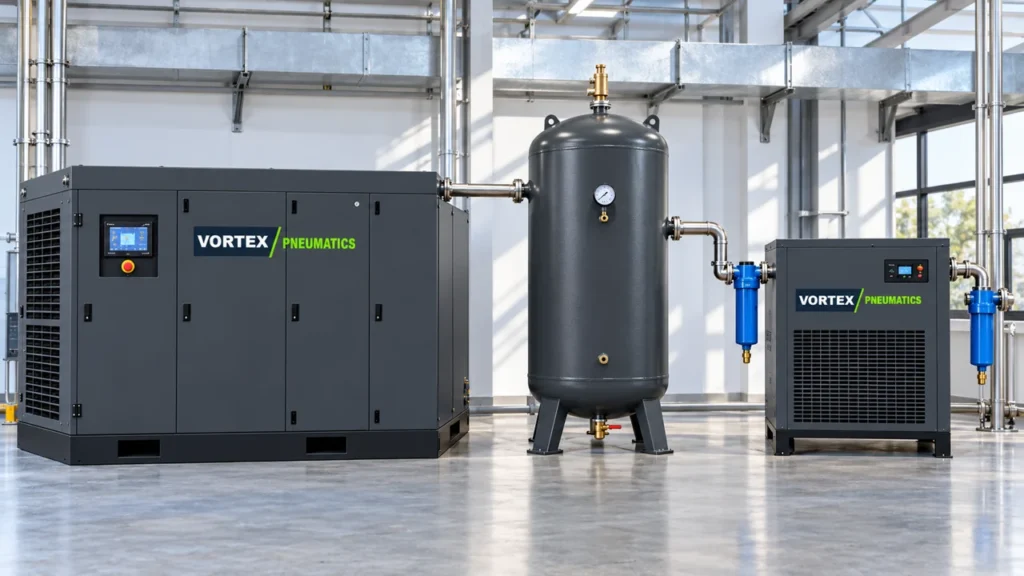
Explore our industrial compressor range in Sri Lanka, including screw compressors, oil-free systems and air treatment. For detailed selection guidance, see the industrial air compressor Sri Lanka guide. Select a system around your factory’s demand, working pressure and operating hours. Vortex Axion can discuss MAC3 product families and Vortex Pneumatics packages, including low-noise options, dryers and receiver tanks. Arrange a free site inspection on 0777 123 263 and confirm the exact model and installation scope in your quotation.
NITROGEN GENERATOR
Our Commitment to You
Discuss your requirements for Industry Range in Sri Lanka with Vortex Axion in Sri Lanka. Call 0777 123 263 or 0117 101 818, or send an enquiry with your site location and equipment specifications.
Selection guide and common questions
On this page: Industrial air compressor selection for Sri Lankan factories · Choose the right industrial compressor family · Industrial air compressor power and operating pressure · Fixed speed, variable speed and noise planning · Dryers, filtration and receiver storage · Free inspection, installation and service planning · Industrial system questions
Industrial air compressor selection for Sri Lankan factories
An industrial air compressor should support the production process at the point of use, not merely meet a motor-power target. Record the airflow and minimum working pressure for each machine, the equipment used simultaneously and the pattern of demand across a shift. An intermittent assembly station and a continuous manufacturing line can need very different storage and control arrangements.
Discuss present demand and realistic expansion separately. Excessive spare capacity can be costly, while too little reserve can expose production to pressure drops. If an existing system is available, bring its nameplate, service history and the circumstances of low-pressure events. Measurements help distinguish an undersized supply from leakage, restricted filters or inadequate distribution pipework.
Choose the right industrial air compressor family
Explore lubricated screw compressors for appropriate sustained duties, oil-free configurations where the process demands them, and reciprocating compressors for suitable intermittent work. Air quality includes moisture and particles as well as lubricant carryover; specifying oil-free compression alone does not define the complete treatment package.
MAC3 range pages and Vortex Pneumatics capacity guides are distinct product options. Confirm the exact manufacturer, model, control arrangement and supplied accessories in your proposal. Manufacturer specifications, rather than generic power-class assumptions, should govern the final selection.
Industrial air compressor power and operating pressure
Our 7.5–315 kW size guide provides individual selection pages. Compare 22 kW, 30 kW, 55 kW and 75 kW options against actual free-air delivery at your intended pressure. A higher pressure requirement may change the delivered airflow and power consumption for a particular model.
Include the losses between compressor outlet and production equipment. Dryers, filters, hoses and pipework can affect usable pressure. Specify the minimum required at the tools or process, and ask the supplier to explain the proposed setpoint and distribution arrangement. Avoid compensating for a restricted line simply by increasing system pressure.
Industrial air compressor controls and noise planning
Steady production and rapidly changing demand need different control reviews. Compare fixed-speed and variable-speed proposals using running hours, minimum load and the time spent unloaded. Multiple-compressor systems also need coordination. Savings depend on the actual demand profile; ask for an assessment rather than accepting an unverified percentage.
For occupied production areas, ask about low-noise enclosed industrial air compressor options and the model’s published acoustic data. Room location, cooling airflow and isolation matter alongside the cabinet design. Keep service access and ventilation clear, and confirm any ducting plan against the manufacturer’s requirements.
Industrial air compressor dryers, filters and receiver tanks
Select refrigerated air dryers or suitable desiccant treatment according to the required outlet quality and operating conditions. Check rated flow, pressure and inlet temperature for the offered dryer. Hotter inlet air or lower pressure can affect the usable treatment capacity; the motor rating alone does not specify a dryer.
A receiver supports fluctuations and the control strategy. Its volume, pressure rating, drainage and inspection requirements must be established for the installation. Ask the proposal to show compressor, storage, filters, dryer and distribution connections. Illustrations on our size pages are explanatory and do not replace an installation drawing.
Free industrial air compressor inspection and service planning
Book a free site inspection to review the industrial air compressor location, power supply, demand and treatment requirements. Provide a floor layout, production schedule, existing equipment details and any future machines already planned. Confirm the visit arrangements and access requirements when contacting Vortex Axion.
Agree on delivery, unloading, electrical work, piping, commissioning and handover responsibilities before ordering. Keep technical sheets and maintenance records together. Browse compressor maintenance, repair support and spare-parts enquiries. For MAC3 families, refer to the official manufacturer resources for the selected model.
Industrial air compressor questions and answers
Which industrial air compressor is suitable for a factory? Select around measured or estimated flow at the required pressure, simultaneous demand, running hours and process air quality.
Can you quote a complete system? Request an itemised offer covering the compressor, receiver, dryer, filtration and agreed installation work.
Is a variable-speed model always preferable? No. Compare control options using the facility’s load profile and the offered machine’s operating range.
How can I arrange an inspection? Call 0777 123 263 or 0117 101818, or use our contact page. Our office is at 31, 1st Lane, Medawelikada Road, Rajagiriya, Sri Lanka.
Measure industrial air compressor demand at the point of use
Prepare an equipment schedule before selecting an industrial air compressor. For each air-powered machine, record the manufacturer’s stated consumption, minimum pressure and whether it runs continuously or intermittently. Identify the busiest period of production and the equipment that operates together. Include the shift pattern and any large short-duration demands such as cleaning, filling or pneumatic actuation.
Where production is already running, explain when pressure falls and where it is measured. A stable pressure at the compressor with a lower reading at a distant workstation can indicate a distribution issue. A system-wide pressure fall at peak demand calls for a different review. Log observations consistently so the supplier can separate changing demand from restrictions or controls.
A measurement plan is particularly useful where several compressors supply the same factory. Document which units run, their setpoints and their unloading behaviour. Do not assume that adding their motor powers describes the usable output. Compare each model’s delivery at pressure and the way the machines are controlled together. Keep any claimed energy improvement tied to the measured operating conditions.
Industrial air compressor standby capacity and future growth
Discuss the consequence of an interruption with your supplier. Some facilities can stop briefly for service; others need a defined standby arrangement. State the production that must continue during maintenance, how long an interruption can be tolerated and whether temporary air supply is feasible. A standby requirement should be explicit in the system brief rather than inferred from a larger motor.
Separate confirmed future machines from speculative expansion. Specify their expected air demand and the likely installation date. The proposal can then address staged capacity or distribution improvements without oversizing the initial supply unnecessarily. Review the controller’s operating range and the role of receiver storage under both today’s demand and the planned load.
For sites with variable shifts, weekends or seasonal production, include the quietest operating period as well as the peak. Minimum demand affects the suitability of controls and the time spent unloaded. The right industrial air compressor package should be evaluated for the whole working pattern, including service arrangements and realistic growth.
Industrial air compressor air quality: practical examples
Explain how compressed air contacts the product or process. Air used for general tools may have different quality requirements from air contacting packaging or a sensitive production stage. Ask the process-equipment supplier for the required moisture, particle and oil limits. The compressor technology, filter selection and drying method should follow that documented requirement.
A vehicle workshop using intermittent air tools needs a review of simultaneous operators and short bursts of demand. A manufacturing line may need sustained flow throughout a shift. A finishing process can have particular moisture and contamination concerns. These examples describe different selection questions; they do not establish that one standard power class suits every workshop or factory.
Where treatment is required, include the environmental and inlet conditions used for sizing. Identify drainage access and the maintenance needed for filters and dryers. A system can have adequate compressor capacity yet provide unsuitable air if treatment is underspecified or poorly maintained. Ask the final offer to state both the compressor performance and the treatment package’s intended operating conditions.
Industrial air compressor location, power and cooling
Provide the industrial air compressor supplier with the planned location and a practical access route. Check doors, turning space, lifting arrangements and the floor position before delivery. Keep the manufacturer’s service clearances available around the cabinet so filters, panels and major components can be reached. Avoid placing storage or production equipment in those service zones.
The offered model’s electrical requirements should be reviewed by a qualified electrician. Confirm voltage, phase, frequency, starting arrangements and the proposed protection. Do not select cabling or breakers from motor power alone. Supply conditions, the machine’s starting method and installation details belong in the electrical review.
Cooling air must reach and leave the machine as intended. Describe enclosed rooms, hot process areas and any proposed ventilation ducting. Ask for the manufacturer’s recommendations before creating a tightly enclosed low-noise location. Acoustic treatment should not reduce the cooling airflow or prevent maintenance access. Confirm the final arrangement with the people responsible for installation and operation.
Compare complete industrial air compressor quotations
Request a technical and commercial schedule for each proposal. It should identify the exact model, rated airflow at pressure, control type, receiver arrangement, dryer and filter ratings, and supplied accessories. Separate equipment supply from electrical work, piping, installation and commissioning. Clear inclusions let you compare quotations without mistaking a compressor-only price for a complete system.
Discuss routine servicing at the same time. Ask for the maintenance schedule, consumable references and the support arrangements for your location in Sri Lanka. Confirm delivery timing, warranty conditions and the process for obtaining replacement parts. Keep the technical offer and handover records available to the people operating and maintaining the system.
During handover, agree which operating checks and operator guidance are included. Record setpoints and the equipment identification, and clarify who handles subsequent changes to controls or production demand. Review the system again when new air users are added. An initial selection remains useful only if the facility continues to operate within the conditions used for the proposal.
Document the industrial air compressor handover
Ask for a handover pack that identifies the industrial air compressor, receiver, dryer and filters by model and serial number. Keep the supplied manuals, warranty conditions, commissioning record and maintenance schedule accessible to the people responsible for the system. If electrical work or distribution pipework is part of the scope, identify the responsible contractor and the documentation supplied for that work.
Record the initial pressure settings and the operating conditions used for the commissioning checks. Explain which production equipment was running during the test. A check under light demand does not describe the system at its busiest shift. Agree how the actual production conditions will be reviewed and who will respond if the delivered pressure differs from the agreed requirement.
Arrange operator guidance for normal starts, stops, alarms and routine observations appropriate to the model. Separate everyday observations from tasks that require a qualified technician. Clarify drainage arrangements, access restrictions and how to report a fault. Keep emergency and isolation procedures within the site’s own safety system and the manufacturer’s documentation.
Review the system when demand changes. Adding a new production line, changing shifts or increasing operating pressure can affect capacity, treatment and controls. Provide the updated equipment list to your supplier before assuming that the original configuration remains suitable. This makes the installation record useful throughout ownership, rather than only on the delivery day.
Industrial air compressor specification questions
What information is needed for an industrial air compressor quotation? Provide the required flow at working pressure, production equipment list, simultaneous demand, shifts and available power supply. Include any process air-quality requirement. If replacing equipment, send the current machine’s nameplate and describe pressure or reliability complaints. This allows the offered package to be compared with a clear operating brief.
Can one industrial air compressor serve several production areas? The answer depends on combined demand, distribution design and pressure losses. Identify the distant or most pressure-sensitive users, and explain which areas operate together. A compressor rating at its outlet does not establish the pressure available throughout a factory. Include the pipework and treatment arrangement in the review.
How much reserve capacity should an industrial air compressor have? There is no universal percentage for every facility. Discuss short bursts of demand, planned equipment additions and the consequence of an interruption. Separate confirmed expansion from possible future growth. The selected machine and storage arrangement should suit the actual operating pattern, rather than rely on an arbitrary oversized power class.
Should an industrial air compressor run at the highest possible pressure? Specify the pressure the process needs and allow for the agreed distribution and treatment losses. Raising pressure does not correct every restriction or leak. Ask the technical proposal to explain the proposed operating setpoint and how it supports the users. Changes should follow the selected model’s documentation and the site’s operating procedures.
Does an industrial air compressor need a dryer? Review the moisture level acceptable to the tools or process. A treatment specification must consider the offered airflow, pressure and inlet conditions. Compressor capacity alone does not determine the right dryer. Ask for the proposed dryer rating, filter arrangement, condensate drainage and the maintenance requirements of the complete system.
Where should a low-noise industrial air compressor be installed? Review the machine’s acoustic information along with ventilation, room conditions and service access. An enclosed cabinet still needs its specified cooling airflow. Avoid choosing a location solely because it is hidden from operators. The arrangement should support practical servicing and a suitable working environment for the actual model.
Can I compare industrial air compressor offers by kW? Motor power is only one item. Compare delivery at the intended pressure, controls, treatment scope, receiver arrangement and installation inclusions. Confirm the exact models and accessories before judging value. A technically complete offer makes the difference between compressor-only supply and a ready-to-commission system clear.
What should I confirm before accepting an industrial air compressor delivery? Check equipment identification against the offer, the supplied documents and the agreed handling arrangements. Confirm who completes installation and commissioning, what operating checks are included and how observations will be recorded. Retain the handover information for service planning and discuss any differences from the agreed specification before proceeding.
Should a quotation show prices in Sri Lankan rupees? Ask the supplier to state the currency, quotation validity, applicable taxes and payment stages clearly. Confirm whether exchange-rate changes affect imported equipment and whether delivery or installation is quoted separately, so the commercial comparison uses the same scope.