
MAC3 Mobile Compressed-Air Equipment
Portable Compressors in Sri Lanka
Compare MAC3 MSP portable compressors for site work in Sri Lanka. Select a model by its delivered airflow at the required pressure, the tools working simultaneously and the expected duty cycle. Check skid, axle or trailer configuration options against your transport and site-access requirements.
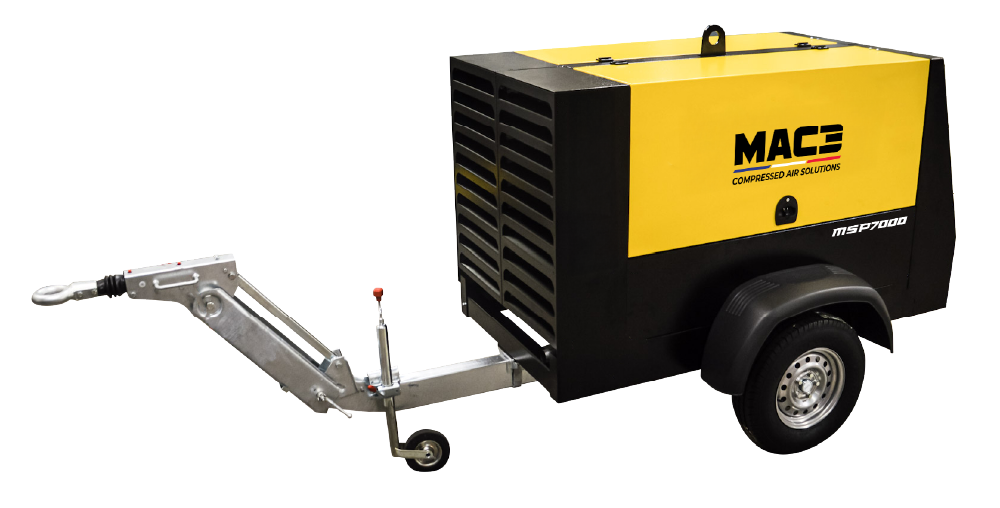
Choosing a diesel air compressor for a Sri Lankan site? Read our diesel compressor selection guide for the information to prepare before requesting a quotation. Include tool airflow, working pressure and daily operating hours.


On this page
TogglePortable compressors price enquiries in Sri Lanka
Request a quotation for portable compressors that identifies the exact model, rated airflow, working pressure and transport configuration. Send your site location, tool list and daily operating hours with the enquiry. A cabinet photograph or a CFM headline is not enough to compare two machines if they have different pressure ratings or supplied accessories.
Ask for a price in Sri Lankan rupees with taxes, transport, lead time and payment terms stated separately. Confirm what is included: the compressor, hose connections, any treatment option, the selected chassis arrangement and commissioning support. Ask the supplier to distinguish equipment supply from services and accessories that need a separate scope.
This category page helps organise MAC3 mobile-compressor enquiries through Vortex Axion. It does not promise that every model or engine version is held in local stock. Availability, offered configuration, warranty conditions and delivery dates should be confirmed in the written quotation before you make a purchase.
Choose portable compressors by tool demand
Prepare a list of the pneumatic equipment you intend to run and obtain each tool’s stated airflow and pressure requirement. Identify which tools operate together and how long the busiest period lasts. Give the supplier those details so the machine can be assessed against the work, rather than selected only because its capacity label sounds familiar.
Explain whether demand comes from a breaker, blasting equipment, spraying equipment or another application. Include hose length, connection arrangement and any special air-quality requirement. These details help define the enquiry and identify which additional information is needed before a model can be recommended.
Ask the proposal to state the delivered airflow at the required pressure and the conditions used for the rating. Compare the selected operating point across suppliers. If the work changes between sites, describe the different duties separately and ask which requirement determines the proposed compressor size.
Portable compressors: pressure and airflow belong together
Portable compressors should be compared using a stated operating pressure alongside the airflow. A machine’s output may differ at different pressure settings, so a family-level capacity description should not be treated as a universal figure. Ask for the current data sheet for the exact model and engine version offered.
State the pressure needed at the tool inlet and provide the hose arrangement for assessment. Do not assume a higher compressor setting is the appropriate answer to a performance problem. Explain what is happening at the tool and ask the supplier to review the complete arrangement within the relevant equipment instructions.
For a replacement, send the existing compressor nameplate and available documents. Note which tool combinations have worked satisfactorily and which have caused difficulty. This gives the supplier a more useful starting point than a request to replace like for like without checking the present duty.
185, 250, 390 and 400 CFM enquiry guides
Check the image caption and the exact offered model’s data. For example, a reference photograph can illustrate the relevant MAC3 range while the machine’s documented rating needs to be confirmed at your pressure. Ask the quotation to resolve that distinction in writing so the order identifies actual equipment rather than a general search phrase.
If your requirement is stated in litres per minute or cubic metres per minute, provide that original value and its rating conditions. Ask the supplier to use consistent units in the proposal. Keep the tool requirement separate from the compressor’s catalogue designation when comparing alternatives.
MAC3 gasoline and diesel portable compressors
The product cards above organise the existing MAC3 range pages. Discuss the smaller gasoline family and diesel families in relation to the work and operating conditions, then request the current model specification. The MAC3 MSP1300 manufacturer page is a useful reference for that compact family; it does not confirm Sri Lankan availability.
For diesel enquiries, provide the expected duty, fuel arrangements and any requirements specified by your client or project. Ask the supplier to identify the engine version and associated documents in the quotation. A catalogue family can contain different configurations, and the offered machine should be clear before purchase.
See the MAC3 MSP2000–3000 manufacturer range for a smaller diesel-family reference. Confirm local supply, service scope and the exact model data with Vortex Axion rather than treating the manufacturer’s international catalogue as a local inventory list.
Portable compressors: skid, axle and trailer configurations
Tell the supplier how portable compressors will be moved between sites and positioned for work. Explain whether the machine is transported on a vehicle, handled at a fixed location or supplied with a selected running-gear arrangement. Request the dimensions, mass and handling information for the exact configuration in the offer.
Ask which transport components are included and which are options. The appearance of wheels in a product photograph does not, by itself, confirm the configuration being supplied or its suitability for your intended transport use. Specify the requirement and ask for the relevant documents before ordering.
Discuss any road-use requirements with the responsible local parties for the actual machine and transport arrangement. This guide does not claim registration or approval for an unverified chassis. Keep transport suitability and equipment performance as separate checks in your purchasing review.
Access, positioning and job-site planning
Provide photographs or a sketch of the intended access route and operating area. Include narrow entrances, changes in level, loading areas and any space restriction. Ask the supplier to review these details using the selected machine’s dimensions and handling instructions.
Identify where hoses will run and how the compressor can be reached for service. Tell the supplier about dust, traffic, nearby activities and the hours in which work will take place. Use the manufacturer’s instructions and your site’s responsible team to confirm the operating arrangement for the actual project.
Confirm delivery, unloading and positioning responsibilities in advance. A machine may be suitable for the duty yet require handling arrangements that were not included in an equipment-only price. Ask the quotation to state those boundaries clearly so the installation or site team can plan them.
Low-noise options for portable compressors
If noise is a concern, explain the site conditions and any client requirement when requesting portable compressors. Ask for the exact model’s declared noise information, the measurement basis and any available enclosure or configuration options. Avoid comparing two headline decibel values when the measurement conditions are different.
Discuss the proposed operating location, working hours and affected areas with the responsible project team. A description such as low noise should be supported by the offered equipment’s documentation and the site assessment. This page does not promise silent operation or a universal noise level for every model.
Ask the quotation to identify any noise-related option separately from the standard machine. Confirm its availability, impact on dimensions or service access and relevant instructions. Keep the site’s requirements with the enquiry so the supplier can explain what the proposed configuration addresses.
Air quality, hoses and accessories for portable compressors
Specify any air-quality requirement from the tool or process manufacturer. Ask whether the selected portable compressors need additional cooling, separation, filtration or drying for that duty, and request the offered arrangement in writing. Do not assume every accessory shown in a brochure is included in the base machine.
Prepare a schedule of tools, hoses, connections and required lengths for the enquiry. Ask the supplier to identify the compatible accessories and their documented operating limits. Confirm who supplies each component so the complete working arrangement is assessed rather than leaving important connections unspecified.
For blasting or another process with a specific air requirement, provide the equipment manufacturer’s information and intended operating conditions. Ask what evidence is needed to verify the proposed arrangement. A mobile-compressor description should not be treated as a guarantee of process-specific air quality or suitability for breathing air.
Fuel, operating schedule and cost comparison
Explain the normal working day, idle periods and the tool combinations likely to operate together. Ask the supplier to assess the offered machine using that schedule. A site that uses compressed air intermittently may have a different requirement from one running a process for most of the shift.
Where fuel cost is a purchasing concern, request an estimate with stated assumptions and available manufacturer information. Compare equivalent working duties rather than assuming a single brochure consumption figure applies to every load. Keep equipment price and projected operating cost separate in the review.
Tell the supplier about your fuel and service arrangements, including any site restrictions. Ask for the supplied instructions and identify who will handle routine operating checks. Avoid making a purchase solely from a promised saving that has no stated basis or identified comparison machine.
Maintenance and spare-parts planning for portable compressors
Ask for the maintenance instructions and service information for the exact portable compressors in the quotation. Confirm the engine and compressor identification needed for parts enquiries. A general MAC3 family description is less useful for maintenance than the model, version and serial information of the supplied unit.
Discuss your operating hours and available service windows before choosing an arrangement. Ask which routine items and consumables are expected, how they are identified and what support is included locally. Availability of particular parts and attendance dates should be confirmed for the actual enquiry.
Keep the documents with your equipment records after delivery. Record service work and issues in a format your team can share with the supplier. For parts enquiries, see our air compressor spare-parts page and provide the nameplate and required component details.
Buy or compare portable compressors for a project
Start with the expected duration of use, frequency of future projects and the work the machine must support. Prepare a requirement sheet before comparing ownership costs or alternative arrangements. Ask Vortex Axion what supply options can be discussed for your enquiry rather than assuming rental or finance is available.
If equipment is being purchased for one contract, include the client’s requirements and the planned operating period. Ask how the proposed configuration will serve later work and which assumptions are specific to the current project. Separate confirmed needs from possible future duties so the proposal remains understandable.
Compare offers by the identified model, operating point, accessories, documents and support scope. Request clarification where an option appears in a brochure but not in the quotation. Keep the final configuration schedule with the purchase record to avoid disagreement about what was ordered.
Free site inspection for portable compressors
Ask Vortex Axion about a free site inspection for your portable compressors enquiry in Sri Lanka. Provide the location, contact person, working hours and a short description of the task. Confirm the appointment and review scope with the team before expecting a visit.
Have the tool requirements, existing machine documents and available site photographs ready. Tell the team whether work can stop for observations, whether access is controlled and who can explain the operating duty. This helps the review focus on the intended equipment requirement.
A preliminary inspection is different from specialist testing, formal approval or a detailed engineering study. Ask which services are included and which need a separate quotation. If the project requirement changes after the visit, request a revised proposal that states the updated model or configuration.
Construction-site enquiry example
Suppose a crew plans to run several pneumatic tools during the same work period. For portable compressors, give the supplier each tool’s airflow and pressure requirement, the number used together and the expected cycle of use. Include the hose schedule and the planned operating location.
Ask the proposed machine to be assessed at that combined duty, with the assumptions explained. If some tools operate only occasionally, identify those periods separately rather than simply adding every catalogue value into one unexplained total. The supplier may need additional information before confirming the choice.
Agree how the working arrangement will be checked using representative tool operation. Confirm the supplied accessories and who is responsible for the site setup. This creates a clearer acceptance plan than ordering by a capacity label without checking the tools and their connections.
Portable compressors delivery and handover checklist
Before delivery, confirm the model, engine version, transport configuration and accessory schedule against the final quotation. Check the planned unloading arrangements and the site contact. Tell the supplier about changes to the access route or work schedule before dispatch.
Ask for the supplied instructions, available documents and a clear record of the handover scope. Ensure your operators know which manufacturer information applies to the actual machine. Identify the service contact and the procedure for reporting an issue after delivery.
Where commissioning or a demonstration is included, agree the conditions and who will attend. Record the outcome and any outstanding items. Keep photographs of the identification plates with the documents so later support requests can identify the equipment accurately.
Portable compressors frequently asked questions
Is CFM enough to select a machine? No. State airflow together with required pressure, tool combinations and operating schedule. Ask for the exact model’s data at the intended operating point.
Are the photographs real MAC3 equipment? The product images are manufacturer references. Check each caption and ask the quotation to identify the actual supplied model and configuration; a photograph is not an inventory or delivery guarantee.
Can I request low-noise options? Yes, include your site or client requirement. Ask for model-specific noise information and available options, with their measurement basis and quotation scope.
Are hoses included? Confirm the accessory schedule. Compressor supply, hoses, connections and any treatment equipment may be separate items, so ask for a complete working-package offer.
Which model should replace my current machine? Send the nameplate, tool list and details of the current duty. Ask for selection against your present requirements rather than assuming a familiar cabinet or power rating is sufficient.
Is immediate delivery available? Availability and lead time must be confirmed for the exact model and configuration. This category page does not promise local stock of every catalogue option.
Request portable compressors guidance in Sri Lanka
Contact Vortex Axion (Pvt) Ltd for portable compressors enquiries in Sri Lanka. Share the tool duty, required pressure, site location and transport requirements, then request an identified machine and accessory quotation. Ask the team about a free site inspection and appointment availability.
Call 0777 626 731 or 0117 101818. Our address is 31, 1st Lane, Medawelikada Road, Rajagiriya, Sri Lanka. Use the contact page to send documents and requirements.
For more diesel selection guidance, read the diesel air compressor enquiry page. Confirm the offered model, scope, availability and rating conditions before placing an order.
Our Commitment to You
Discuss portable compressors in Sri Lanka with Vortex Axion and ask about a free site inspection. Call 0777 626 731 or 0117 101818, or send your tool requirements and site location.